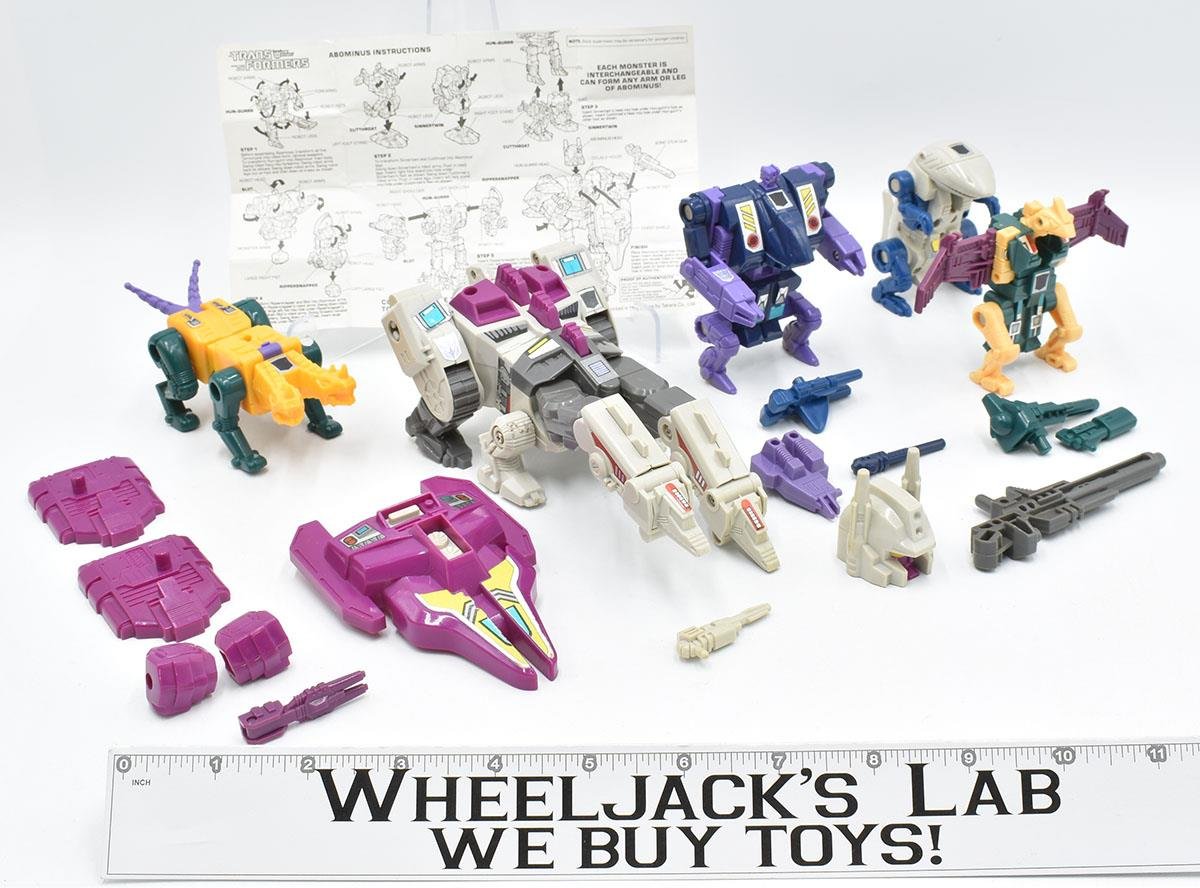
Few toy lines have captured the imagination and loyalty of generations quite like Transformers Generation 1. More than just plastic and die-cast, these transforming robots from the 1980s represent a cultural phenomenon that redefined play and storytelling. From their humble beginnings as re-branded Japanese imports to becoming a global titan, G1 Transformers continue to resonate with collectors and fans worldwide, proving that their appeal is truly enduring.
Whether you're reliving childhood memories, embarking on a new collecting journey, or simply curious about the robots in disguise, understanding the rich history and intricate details of these iconic toys is essential.
The Spark of a Phenomenon: How G1 Conquered the 80s
The 1980s toy market was a vibrant, competitive landscape, teeming with companies and innovative concepts. Before Transformers, competitors like Tonka's GoBots (Bandai's Machine Robo) had already hit shelves, and Takara had made prior attempts with Diakron and Kronoform. Transformers itself began as an amalgamation of several international versions of Takara's popular Diaclone and Micro Change figures. What made Hasbro's Transformers stand out and achieve unparalleled success? It was a masterful combination of improved strategies, drawing heavily from the success of their own 1982 G.I. Joe relaunch.
Hasbro's approach was multifaceted:
- Strategic Product Mix: Unlike competitors focused solely on small toys, Transformers offered a range. Larger, more intricate figures served as "status symbols," while smaller items provided accessible "entry points" for every budget. These figures often boasted numerous accessories and detailed add-on stickers.
- Immersive Packaging and Lore: Perhaps one of the most crucial elements was the narrative. Marvel author Bob Budiansky penned extensive character bios, effectively "humanizing" these alien robots. Each Transformer gained a distinct personality, a memorable motto, and detailed powers, all mirrored in their collectible "Tech Specs"—numeric stats initially hidden by a decoder, later visible. This deep lore transformed toys into characters with rich backstories. To truly Explore G1 Transformers history Dive into the depth of this innovative approach, our dedicated guide offers a deeper look into the origins of these beloved characters.
- Engaging Mail-away Offers: Mirroring G.I. Joe's "Flag Points," "Robot Points" clipped from packaging served as proof of purchase, allowing fans to acquire exclusive, not-at-retail toys like the Omnibots. This fostered incredible engagement and loyalty.
- Pioneering "Advertainment": Leveraging newly deregulated broadcasting, Hasbro partnered with Marvel Comics, Marvel Productions, Griffin Bacal, and Sunbow Productions. The resulting high-quality comic books and animated series—starting with G.I. Joe and quickly followed by Transformers—were more than just commercials. They were powerful, serialized storytelling, offering serious plots, superior animation, and an ability to depict action (as robots could be rebuilt), effectively serving as compelling, long-form advertising.
The US Toyline Evolution: A Seven-Year Journey (1984-1990)
The Transformers toyline's seven-year run in the US was exceptionally long for the era, a testament to its enduring popularity and Hasbro's evolving strategy.
1984: The Foundation Is Laid
The initial launch saw minimal changes from the Japanese Diaclone and Microman figures. Primarily, sticker alterations (faction symbols replacing "Diaclone" text) and minor safety retooling (like weakened missile launcher springs) were the extent of the modifications. Iconic Autobots were primarily cars and trucks, while Decepticons took on a wider variety of forms. Construction heavily relied on die-cast metal, rubber tires, and chrome, which, while premium at the time, ironically contributed to poor aging and breakage over time. These early figures, often display pieces due to limited articulation, set the stage for a revolution. If you're looking to Identify G1 Transformers toys G1 Transformers from this foundational year, paying close attention to these original material choices and sticker details is crucial.
1985: Expanding Horizons and the Rubsign Era
This was a highly successful year that significantly expanded the offerings. Hasbro delved into the remaining Diaclone and Micro Change "Car Robot" models, introduced redecos, and rolled out in-development concepts. This year saw the debut of fan-favorites like the six combining Constructicons (forming Devastator), the formidable Dinobots, and the mischievous Insecticons. Output doubled that of 1984, and a crucial identifier was introduced: a heat-sensitive "rubsign" added to all 1985 toys (and re-released 1984 figures) to signify a "true" Transformer. These early production details are invaluable when you need to Identify G1 Transformers toys G1 Transformers for authenticity.
1986: The Movie Era and Shifting Tides
With the Diaclone/Micro Change molds largely depleted, 1986 marked a significant shift to all-new toolings. The animated film, The Transformers: The Movie (set in 2005), dramatically reshaped the fiction, introducing new Cybertronian and futuristic designs while tragically eliminating many original characters to make way for new toy lines. This era also saw the introduction of Takara's "Scramble City" style combiners with interchangeable limb-bots. Crucially, cost-saving measures meant die-cast metal began to be phased out in favor of cheaper, lighter plastics.
1987: Gimmick Central (Headmasters and Targetmasters)
This year was dominated by "sci-fi" vehicle modes and sub-gimmicks like the Throttlebots' pull-back motors and the Monsterbots' spark-firing. The unifying theme, however, was the Nebulan "Master" partners, introducing Headmasters and Targetmasters. The colossal, two-foot-tall Fortress Maximus, priced at an astounding $100 in 1987, showcased Hasbro's ability to command retail shelf space. However, this year also signaled the start of the franchise's decline; the cartoon series ended, and mail-away offers slowed.
1988: Pretenders and Powermasters
Sales continued to decline as new gimmicks were rolled out. Combining Mini-Cassettes, Seacon limb-bot cannons, and combining Targetmaster Nebulans appeared. Major new additions included:
- Pretenders: Transformers housed inside armored warrior or monster outer shells, offering a "two warriors in one" concept. The inner robots' complexity and small parts often contrasted sharply with the outer shells' limited articulation, leading to low kid appeal.
- Powermasters: Robots whose Nebulan partners served as engine "keys" to unlock transformation. Optimus Prime even returned as a Powermaster, indicating a strategic shift towards reintroducing popular characters. The line's decline was exacerbated by the surging popularity of Teenage Mutant Ninja Turtles.
1989: Rebranding and Micromasters
Hasbro responded with a significant rebranding effort, streamlining subgroups and introducing a fresh look. Everything now fell under expanded Pretenders and the new 1-inch-tall Micromasters, a direct response to Galoob's highly successful Micro Machines. Micromasters were sold in packs of four or with transforming vehicles and interconnecting base-mode playsets. "Classic Pretenders" were released, leveraging nostalgia, and "Legends" (Pretenders without shells) became the first store-exclusive Transformers at Kmart. The packaging underwent a dramatic change with a new logo and gimmick-specific color-coding (gold for Pretenders, silver for Micromasters) replacing traditional faction colors.
1990: The Final Stand (Action Masters)
Facing severe challenges from Ninja Turtles' continued dominance and the rise of home video games like Super Nintendo, Hasbro attempted a large-scale nostalgia appeal. Micromasters continued, and Action Masters were introduced—non-transforming G.I. Joe-scale action figures of classic and new characters, often paired with transforming vehicles. Despite these efforts, it wasn't enough; the US line was canceled, only to return two years later as Generation 2. As you delve deeper into Explore G1 Transformers collecting, understanding these crucial turning points in the original line's run can greatly inform your search for specific pieces.
Beyond American Shores: Global G1 Variations
While the US line set the standard, Transformers quickly became a global phenomenon, leading to fascinating and often rare variations across different markets. These international releases are often highly sought after by collectors and require specific knowledge to Identify G1 Transformers toys G1 Transformers accurately.
- Japanese Transformers Lines: Takara's own Transformers line, launched in 1985, was a massive success, propelled by a unique story and cartoon that often diverged from Hasbro's. Japan developed its own annual sub-franchise titles for media and produced unique, highly sought-after toys before eventually aligning more closely with Hasbro's lead and ending in 1992.
- European Transformers Lines: Early European releases were largely identical to US lines, sometimes manufactured by non-Hasbro partners (e.g., Milton Bradley's rare red Tracks). Notably, the European line continued even after the US cancellation, introducing exclusive Action Masters and redecoed Takara molds in 1991. The 1990 "Classics" subline reissued many 1984-1987 toys. By 1992, Europe received exclusive, "traditional" Transformers with less intrusive gimmicks and distinct faction color schemes, reflecting 90s pastel trends with hot-pink transparent Autobot plastics and toxic clear-green Decepticons. This market adopted Generation 2 faction symbols in 1993, uniquely bridging the gap between G1 and G2.
- Latin American Transformers Lines: Due to protectionist laws, Latin America developed a unique and inconsistent set of lines. National companies licensed and manufactured their own versions, resulting in smaller scopes but often featuring new colors, promotional materials, and even some exclusive molds. Examples include Mexico's IGA, Brazil's Estrela (with its unique Optimus/Malignus factions), and Argentina's Antex. Cheaper Mini Vehicle variants from Peru/Chile (Lynsa) and Venezuela (Rubiplas) also exist. Their rarity and unique variations make many Latin American Transformers highly coveted by collectors, significantly impacting their G1 Transformers Value & Pricing.
- Chinese The Transformers Toyline: Launched late in August 1989, manufactured in Chinese factories, and distributed across China, Taiwan, and South Korea, this line ran through 1995. Toys were mostly identical to earlier releases, with minor manufacturing/deco changes and Chinese name stickers. This late but significant introduction to China planted the seeds for the country's current importance in the global Transformers market.
The G1 Renaissance: From Reissues to Masterpieces
After the original G1 line concluded and subsequent attempts like Generation 2 and Beast Wars represented radical shifts, "Generation 1" took time to return as a major part of the franchise. However, by the turn of the century, the market for older collectors began to strengthen, leading to a vibrant revival.
Reissue Lines: A Blast from the Past
Reissues provided fans with opportunities to acquire classic molds, albeit sometimes with modern adjustments.
- Takara: Led the charge with sporadic reissues starting in 2000, including "The Transformers Collection" (2002) with modified toys and "Transformers Encore" (2007) offering "enhanced" classics in original packaging.
- Hasbro: Generally focused on new lines but released reissues as exclusives or alongside modern lines. Their "Generation One Commemorative Series" (2002) for Toys"R"Us was less popular due to safety changes and high prices. More recently, "Vintage G1" (2018) for Walmart and a "Retro" line (2023) offered G1-styled boxes with subtle changes. Understanding the nuances between original releases and reissues is vital when considering G1 Transformers Value & Pricing for your collection.
Modern Updates: Reimagining the Classics
Beyond reissues, new lines emerged, offering contemporary interpretations of G1 characters for a new era of collectors.
- Alternators (2003) / Alternity (2009) / GT: Mission GT-R (2013): These lines focused on 1:24 or 1:32 scale licensed real vehicles with incredibly complex transformations, targeting older collectors. Japanese Binaltech versions even featured die-cast metal, a nod to G1's early days.
- Masterpiece (2003): The "ultimate" collector's G1 toyline. Led by Takara, with select Hasbro releases, Masterpiece figures are larger, highly detailed, animation-accurate renditions with complex engineering. This line became a regular release from 2011, establishing a new gold standard for G1 reverence.
- Classics (2006) & Generations (2010): Classics set the mold for modern G1-based toys: contemporary recreations of classic characters in updated forms, primarily at the Deluxe scale. Its resounding success led to its continuation as "Generations," now an umbrella branding for collector-oriented products. These lines continuously reimagine and update the original cast, providing endless opportunities if you're ready to Explore G1 Transformers collecting.
- Takara's Modern Lines: Parallel to Hasbro, Takara released lines like Henkei! Henkei! (2008), United (2010), and Legends (2014), often with more extensive paint applications and animation-accurate decos. Eventually, brand unification with Power of the Primes (2018) meant that Generations toys largely converged, with exclusives often imported.
Caring for Your Cybertronian Treasures
The very materials that made early G1 Transformers so appealing—die-cast metal, rubber, and chrome—are also their greatest vulnerability. Over decades, plastics can become brittle, chrome can flake, rubber tires can degrade, and stickers can peel. These vintage figures are more than just toys; they're pieces of history. Whether you're a seasoned collector or just starting, knowing how to preserve your figures is paramount. For essential guidance on maintaining the condition and longevity of your beloved figures, our dedicated pillar on G1 Transformers Restoration & Care offers vital advice and techniques.
The Enduring Legacy
From the nostalgic rush of their iconic transformations to the thrilling stories they inspired, Transformers Generation 1 toys have left an indelible mark on popular culture. They represent a golden age of toy design, clever marketing, and rich storytelling that continues to captivate. Their journey, from initial imports to a global phenomenon and through multiple revivals, underscores their timeless appeal. Dive deeper into each facet of this incredible legacy and discover why these robots in disguise will always be more than meets the eye.