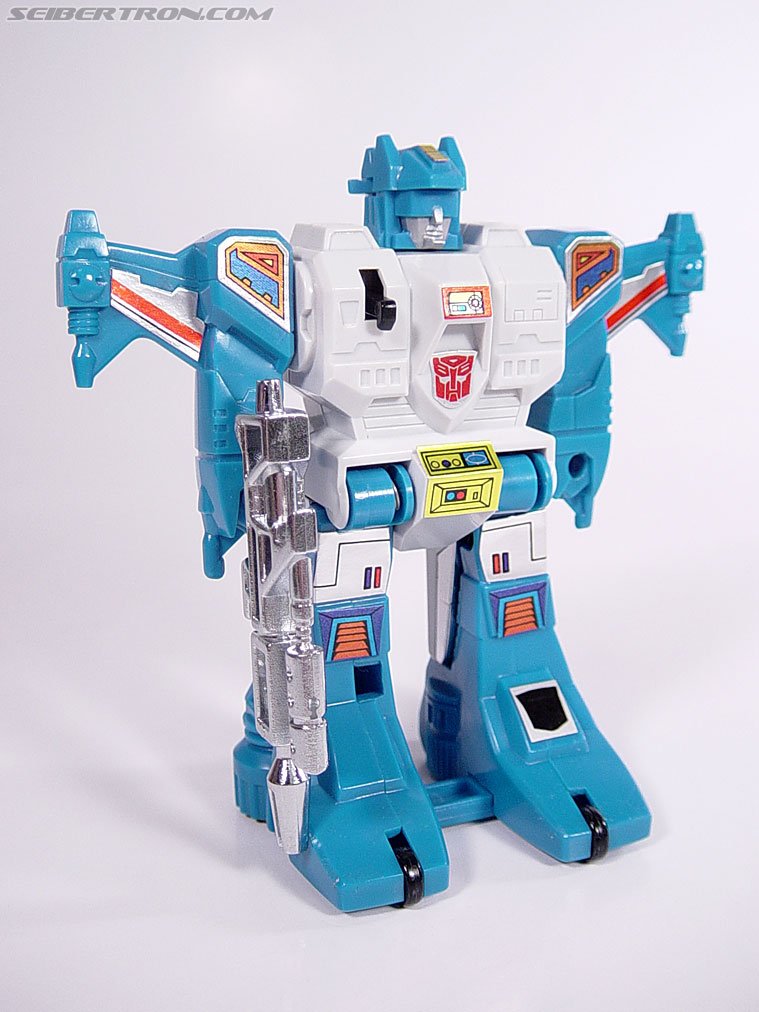
For many, the mention of "Transformers" immediately conjures images of the original Autobots and Decepticons – heroic Optimus Prime, cunning Megatron, the loyal Bumblebee, and the treacherous Starscream. These aren't just characters; they're titans of pop culture, born from a brilliant fusion of Japanese toy engineering and American storytelling genius. Delving into the History & Lore of G1 Transformers Toys isn't just a trip down memory lane; it's an exploration of how a simple concept transformed into a global phenomenon, shaping the very blueprint for modern transmedia franchises.
Before you dive into the metallic depths of Cybertronian history, here’s a quick overview of what made G1 Transformers so special:
- A Tale of Two Countries: Began as a joint venture between America's Hasbro and Japan's Takara, reimagining existing robot toys for a new market.
- More Than Just Toys: Hasbro, with Marvel Comics, crafted rich character backstories, personalities, and "Tech Specs" that brought robots to life.
- Marketing Mastery: A coordinated blitz of cartoons, comics, and mail-away offers created an immersive world that drove unprecedented sales.
- Evolution in Plastic & Metal: Started with die-cast, rubber, and chrome, but quickly adapted to new designs, eventually favoring plastic and introducing innovative gimmicks.
- A Lasting Legacy: Though the original US line ended in 1990, its core concepts, characters, and mythology laid the foundation for every iteration that followed, from reissues to the hyper-detailed collector lines of today.
The Genesis: East Meets West in a Robo-Renaissance
The year was 1984, and the American toy market was ripe for something new, something transformative. Hasbro, a leading US toy company, sought to capitalize on the burgeoning popularity of robot toys. Their gaze turned eastward, specifically to Japan's Takara, a company renowned for its innovative "Diaclone" and "Micro Change" lines of transforming robots. These were sophisticated, well-engineered figures ��� cars that became robots, cassette players that became robots – but they lacked a cohesive narrative for a Western audience.
This is where Marvel Comics entered the fray. Hasbro partnered with Marvel, tasking them with creating a compelling backstory that would unify these disparate robot designs. Marvel writer Jim Shooter reportedly coined the name "Transformers," and from there, writer Bob Budiansky began fleshing out the concept: two warring factions, the heroic Autobots and the villainous Decepticons, crash-landing on Earth from their home planet of Cybertron. Suddenly, a collection of cool Japanese robots had a purpose, a history, and an epic struggle. This symbiotic relationship between toy and story would become the cornerstone of the franchise's enduring success.
The Marketing Marvel: How Hasbro Built a Universe
Hasbro wasn't just selling toys; they were selling characters, stories, and an entire universe. Drawing heavily from the successful revival of their G.I. Joe line, they applied a strategic, multi-pronged approach that was revolutionary for its time.
First, character was king. Every G1 Transformer toy came with a detailed bio, penned by Marvel's Bob Budiansky, which included a personality, motto, and crucial "Tech Specs." These weren't just stat blocks; they imbued each figure with a distinct identity. You didn't just buy a yellow Volkswagen Beetle; you bought Bumblebee, the loyal scout, whose courage compensated for his small size. This emphasis on character depth was a game-changer, fostering emotional connections that competitors like Tonka's GoBots struggled to match.
The 1980s also presented a unique opportunity: deregulation. This allowed toy companies to partner directly with animation studios and comic publishers to create content that was, in essence, a prolonged commercial. Hasbro seized this with gusto, collaborating with Marvel Comics and Sunbow Productions to launch the iconic Transformers animated series and comic book line. These weren't cheap, rushed productions; they featured serious storylines, compelling drama, and robot-on-robot action that captivated audiences. The cartoon, in particular, provided crucial context, demonstrated transformations, and showcased the figures in dynamic battles, significantly boosting toy sales. You can delve deeper into how the animated series evolved the lore in our guide to the history of Transformers animation.
Beyond the core products, Hasbro fostered fan engagement through mail-away offers. Collectors could cut "Robot Points" from toy packaging and send them in to receive exclusive figures not available at retail. This created a secondary layer of collectibility and incentivized repeat purchases, deepening loyalty to the brand. Large figures like Optimus Prime and Megatron quickly became "status symbols" in the schoolyards, reinforcing the idea that these weren't just playthings, but valuable pieces of a larger, coveted collection.
Early Evolution: Metal, Rubber, and a Rubsign (1984-1985)
The initial wave of G1 Transformers toys largely comprised rebranded Takara molds, primarily from their Diaclone and Micro Change lines, alongside a few other Japanese sources. This meant a distinct design aesthetic characterized by robustness and realism.
Autobots, the heroes, mostly transformed into real-world vehicles: cars, trucks, and vans, reflecting their desire to blend in on Earth. Think Optimus Prime's Freightliner COE truck, the various Autobot cars like Prowl (a Datsun Fairlady Z police car) or Sideswipe (a Lamborghini Countach). Decepticons, on the other hand, frequently adopted more menacing or unconventional alternate modes: fighter jets like Starscream, a Walther P38 handgun for Megatron, or cassette players for Soundwave and his mini-cassette minions. This differentiation visually reinforced their roles.
These early figures were a masterclass in toy engineering for their era. Many featured significant amounts of die-cast metal, giving them a satisfying heft. Real rubber tires added to the realism, and chrome accents often adorned bumpers, grilles, and weapons. While these materials conveyed quality and durability at the time, they later presented challenges. The die-cast metal, particularly where pins were used, could lead to breakage and paint chipping over time. The chrome often flaked, and the rubber tires could degrade or become brittle. Articulation, while present, was typically limited, focusing more on the transformation mechanism than dynamic posing.
A notable addition in 1985 was the "rubsign." To combat counterfeits and provide an element of surprise, Hasbro introduced heat-sensitive stickers. Rubbing them would reveal the insignia of either the Autobot or Decepticon faction, confirming authenticity and adding a fun interactive element for kids.
This period also saw the introduction of pivotal subgroups. The Constructicons, a team of six Decepticon construction vehicles, amazed kids by combining to form the mighty Devastator – arguably the first mainstream combiner robot and a defining moment for the line. The Dinobots (Grimlock, Slag, Sludge, Snarl, Swoop) brought powerful, prehistoric might to the Autobot ranks, while the Insecticons offered unique bug-to-robot transformations for the Decepticons. These additions dramatically expanded the play patterns and appeal of the line. For a deeper dive into the specific design choices and materials, consider our breakdown of G1 toy design and materials.
Mid-Era Metamorphosis: Movie Magic and Master Gimmicks (1986-1987)
By 1986, Hasbro faced a new challenge: the well of existing Japanese molds was running dry. This necessitated a shift towards original designs and a bolder vision for the future of the brand. This future arrived with The Transformers: The Movie.
Released in 1986, the animated film was a pivotal, albeit controversial, moment. It introduced a new generation of characters with sleek, often futuristic alt-modes, many designed directly for the movie. Iconic figures like Optimus Prime, Megatron, and many original Autobot cars were tragically killed off, making way for Rodimus Prime, Galvatron, and a host of new recruits like Ultra Magnus, Springer, and Arcee. While initially shocking to young fans, the movie cemented the concept of evolution within the Transformers universe and paved the way for fresh toy designs.
The film's impact was mirrored in the toyline. We saw the introduction of more complex combiners with the "Scramble City" concept, where interchangeable limbs allowed for greater customization (e.g., the Aerialbots forming Superion, the Stunticons forming Menasor). The reliance on die-cast metal began to wane, gradually replaced by more durable and cost-effective plastic. This shift, while sometimes lamented by purists, often allowed for better articulation and more intricate transformations.
1987 saw the introduction of overarching "Master" gimmicks, designed to inject new life into the line. Headmasters featured smaller robots that transformed into the heads of larger robots, bringing a pilot-driver dynamic to the figures. Targetmasters, similarly, involved smaller robots transforming into weapons for their larger counterparts. These innovations added new layers of play and collectibility. The pinnacle of this era was arguably the release of Fortress Maximus, a massive 2-foot-tall city-bot that transformed from a battleship into a city, then into a colossal robot. With a price tag around $100, it was a true status symbol and a testament to the franchise's ambition.
The Winds of Change: Decline and Desperation Gimmicks (1988-1990)
Despite the innovations, sales began to plateau and then decline starting around 1988. The landscape of children's entertainment was evolving, and new competitors were emerging. The most significant of these was Teenage Mutant Ninja Turtles, which offered a fresh, quirky appeal that captured the imagination of many kids who had grown up with Transformers.
In response, Hasbro doubled down on gimmicks, striving to keep the line fresh and competitive.
- Pretenders (1988): These figures featured robots encased in non-transforming, often organic-looking outer shells. This offered a surprise element and a different aesthetic, but some fans felt it strayed too far from the core transforming concept.
- Powermasters (1988): Similar to Headmasters, these involved smaller engine-block robots that plugged into larger figures, "unlocking" their transformation into vehicle mode.
- Micromasters (1989): A direct response to the popularity of smaller, collectible toys like Micro Machines, these were tiny 1-inch robots, often sold in teams and accompanied by transforming playsets or vehicle carriers. While innovative, their small scale was a departure from the larger, more imposing figures that defined earlier years.
The final US subgroup, Action Masters (1990), represented the most radical departure from the franchise's original concept. These were non-transforming, G.I. Joe-scale action figures, often accompanied by transforming weapons or vehicles. While they retained the beloved characters and offered improved articulation, the very essence of a "Transformer" – the ability to change form – was absent. This move signaled a brand in flux, struggling to reinvent itself in a changing market. Ultimately, the US line was canceled in 1990 due to declining sales.
Regional Legacies: G1's Global Afterlife
While the US line concluded in 1990, the story of Generation 1 was far from over. The franchise continued its run in Japan until 1992 and in Europe until 1993, with each region developing its own unique flavor and exclusive releases.
Japanese G1, for instance, introduced entirely new animated series like Headmasters, Super-God Masterforce, and Victory, alongside corresponding toy lines that pushed the boundaries of transformation and combination. These lines often featured more intricate designs and even larger, more complex figures than their US counterparts.
Europe saw a seamless transition from the original G1 line directly into "Generation 2" without the hiatus experienced in North America. European exclusives like the Predators, Turbomasters, and Obliterators added distinct characters and design aesthetics, demonstrating the brand's adaptability and continued popularity in certain markets. These regional variations highlight how diverse and expansive the G1 universe truly was, far beyond what was available on American toy shelves.
It's important to note that the term "Generation 1" itself wasn't an official Hasbro designation at the time. It was an ascended fan-term, coined by collectors to distinguish the original 1984-1990 toy line and its associated fiction from the subsequent "Generation 2" (G2) line, which launched in 1992-1993. This fan-driven nomenclature helped establish the core universe, concepts, and characters that remain foundational to the entire Transformers franchise today, serving as the benchmark for all future iterations.
The Resurgence: G1's Enduring Legacy and Modern Evolution
After the initial run, G1 Transformers took some time to fully regain its prominence. However, as the 2000s dawned, a powerful wave of 1980s nostalgia began to swell, bringing G1 roaring back into the cultural consciousness.
This nostalgia fueled a "reissue boom" that delighted original fans and introduced new collectors to the classic designs. Takara (Japan) led the charge with lines like The Transformers Collection (2002) and Transformers Encore (2007), meticulously re-releasing original molds with updated paint schemes and packaging. Hasbro followed suit with its Generation One Commemorative Series (2002) and later the Vintage G1 line (2018), offering classic figures to a new generation through major retailers. These reissues offered a chance to own childhood favorites (or discover them for the first time) without venturing into the often-pricey vintage market.
Concurrently, new G1-based toy lines began to emerge, setting unprecedented standards for collector-oriented products:
- Alternators (2003): These highly detailed figures transformed from licensed, realistic 1:24 scale vehicle models, blurring the lines between collectible car models and action figures. They showcased an incredible level of engineering and realism.
- Masterpiece (2003): Often considered the pinnacle of collector-grade Transformers, the Masterpiece line (from Takara Tomy and Hasbro) focuses on hyper-accurate, animation-inspired designs. These figures feature intricate transformations, premium materials, and unparalleled detail, often aiming to perfectly replicate characters as they appeared in the G1 cartoon. They are designed for discerning adult collectors.
- Classics (2006) / Universe / Generations: This category represents Hasbro's mainstream update to G1 characters. Lines like Classics, Universe, and the ongoing Generations (which encompasses various sub-lines like War for Cybertron and Legacy) provide modern interpretations of G1 characters using contemporary toy technology. These figures offer improved articulation, updated engineering, and often more robust plastic construction, making them popular with both new and long-time fans looking for playable, updated versions of their favorites. These lines often serve as excellent entry points for those interested in collecting G1 Transformers without the high cost of vintage originals or Masterpiece figures.
These lines, under various brandings (e.g., Hasbro's Universe, Generations; Takara's Henkei! Henkei!, Unite Warriors), continue to update and reimagine G1 characters for contemporary audiences, ensuring the original cast remains relevant and beloved.
Unpacking the G1 Legacy: What Made it Stick?
Why has Generation 1 endured so powerfully when many other 1980s toy lines have faded? It boils down to a few critical factors that Hasbro, Takara, and Marvel got right from the start:
- Compelling Mythology: The core narrative of good vs. evil, freedom vs. tyranny, and a war waged by giant sentient robots struck a chord. The characters, with their distinct personalities and motivations, were easy to root for or against.
- Innovative Concept: Transforming vehicles were inherently cool. The "robot in disguise" element added intrigue and replayability, offering two distinct modes of play.
- Transmedia Synergy: The synchronized release of toys, cartoons, and comics created an immersive experience. Kids weren't just playing with toys; they were enacting stories they saw on TV and read in comics.
- Iconic Designs: Many G1 designs are instantly recognizable and aesthetically pleasing, whether in vehicle or robot mode. They set a high bar for what a transforming robot could be.
- Nostalgia Factor: For those who grew up in the 80s, G1 Transformers are a powerful symbol of childhood, a tangible link to a simpler time. This deep emotional connection fuels the adult collector market and the demand for reissues and updates.
Embarking on Your Own G1 Journey
Whether you're a seasoned collector or a curious newcomer, the world of G1 Transformers toys offers a rich tapestry of history, innovation, and pure fun. Understanding the line's evolution – from its die-cast origins to its plastic-centric later years, from simple transformations to complex Masterpiece figures – enhances your appreciation for every Autobot and Decepticon.
Collecting vintage G1 figures can be a rewarding endeavor, but be mindful of the materials used in early releases. Die-cast parts, chrome, and rubber tires can show significant wear or degradation over time. Modern reissues or collector lines like Masterpiece offer a fantastic way to experience these characters with updated quality and often improved articulation.
Ultimately, the History & Lore of G1 Transformers Toys is a testament to the power of imagination and clever marketing. It's a story of robots in disguise who, for nearly four decades, have continued to captivate hearts and minds across generations. Ready to roll out and explore the vast world of these iconic figures? Explore Generation 1 Transformers toys and begin your own adventure into the history of Cybertron's greatest heroes and villains.