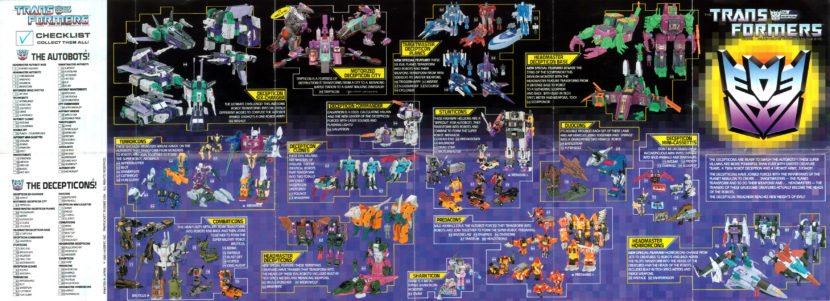
For anyone who remembers the thrill of opening that first Autobot or Decepticon, the hunt for Original Transformers G1 toys often extends far beyond collecting. It’s about preserving a piece of childhood, deciphering a complex lineage, and yes, sometimes, securing a significant investment. But how do you truly know what you’ve got? This comprehensive guide offers essential insights into G1 Transformers Toy Identification & Guides, ensuring you can confidently tell a rare hero from a common foot soldier, or an authentic piece from a clever knock-off.
The world of Generation One (G1) Transformers is vast, intricate, and occasionally perplexing. With hundreds of unique molds, countless accessories, and a history spanning nearly a decade (1984-1993), precise identification is the bedrock of serious collecting. Forget simply guessing; we're here to arm you with the knowledge and tools to become a master identifier.
At a Glance: What You’ll Discover
- Why Identification Matters: Uncover the true value and history of your G1 Transformers.
- The G1 Era Defined: Understand the scope of toys released from 1984-1993.
- Essential Identification Techniques: Learn to spot key differences in robot and alternate modes.
- Deciphering Markings: How to read copyright stamps, country of origin, and other crucial identifiers.
- Avoiding Common Pitfalls: Distinguish reissues, knock-offs, and variants from original releases.
- Leveraging Key Resources: The best physical and online tools for precise identification.
- Beyond Identification: Briefly touch on accessory matching and condition assessment.
Why Bother with Meticulous G1 Toy Identification? The Stakes Are Higher Than You Think
Imagine stumbling upon a dusty box in your attic, revealing what you think might be a vintage G1 Optimus Prime. Is it the real deal? A later reissue? Or a well-made bootleg? The difference isn't just sentimental; it can be hundreds, even thousands, of dollars. Precise identification isn't merely a hobbyist's obsession; it's a critical skill for:
- Authenticity: Ensuring your collection comprises genuine pieces.
- Valuation: Accurately assessing worth for insurance, sale, or trade. Mark Bellomo's "Transformers: Identification and Price Guide," for instance, highlights how current values for all figures are presented in varying condition grades, directly correlating identification with monetary worth.
- Completion: Knowing exactly which accessories belong to which figure, a common challenge given the sheer volume of tiny, easy-to-lose parts.
- Historical Accuracy: Understanding the specific release year, variant, and story behind each figure, often linked to the original Tech Specs, Sunbow cartoon series, and Marvel comic books.
From seasoned collectors and toy dealers to casual fans revisiting childhood memories, everyone who staged epic basement battles between the heroic Autobots and the evil Decepticons needs an accurate guide to decipher the more than 300 G1 Transformers toys produced across that golden era.
The Golden Era: Defining Generation One Transformers (1984-1993)
The G1 era, primarily recognized as 1984-1990 in North America but extending to 1993 for some international releases and later sub-lines, is the genesis of the Transformers phenomenon. These were the "Robots in Disguise" that captivated a generation, often originating from Japanese Diaclone and Micro Change lines before being rebranded for the Western market by Hasbro.
What makes G1 toys unique? Their blend of die-cast metal parts (especially in earlier waves), robust plastic construction, and often intricate, yet intuitive, transformations. Each came with a unique "Tech Spec" decoder, providing insights into their function, personal motto, and ability scores – details that Mark Bellomo's definitive guide meticulously catalogs alongside expert commentary on character attributes and secondary market popularity. This guide also boasts over 1,200 color photographs, presenting every character in both robot and alternate modes, complete with accessories. It’s an unparalleled resource for understanding the true scope of G1.
Your Toolkit for Precise Identification: Key Visual Cues & Markings
Identifying a G1 Transformer often begins with a detective's eye for detail. You're looking for patterns, unique characteristics, and subtle stamps that tell a story.
Start with the Obvious: Robot Mode vs. Alternate Mode
The first step in G1 Transformers identification is usually to assess both forms.
- Robot Mode:
- Head Sculpt: Is it unique? Does it match known characters? (e.g., Optimus Prime’s iconic faceplate, Megatron’s bucket helmet).
- Color Scheme: While some characters share colors, specific combinations are often tell-tale (e.g., Soundwave's blue and grey, Starscream's white, blue, and red).
- Faction Symbols: The heat-sensitive Autobot and Decepticon logos (often referred to as "rubsigns") are crucial. Their placement, condition, and even slight variations can offer clues.
- Distinctive Features: Unique weaponry, chest designs, armaments, or leg structures can narrow down the possibilities significantly. Think about Grimlock's dinosaur head on his chest or Rodimus Prime's spoiler wings.
- Alternate Mode:
- Vehicle Type: Is it a jet, car, truck, tank, cassette player, animal? This immediately groups figures into categories.
- Specific Model: Can you identify the real-world vehicle it's based on? Many early G1 cars were licensed models (e.g., Porsche 935 for Jazz, Datsun Fairlady Z for Prowl/Bluestreak/Smokescreen).
- Visible Details: Exhaust pipes, spoilers, cockpit designs, weaponry placements – these all contribute to a character's unique identity.
Delving Deeper: The Power of Identification Marks
Beyond visual aesthetics, the true "birth certificate" of a G1 Transformer lies in its molded markings. These are non-negotiable for authenticating and identifying your figures.
Copyright Stamps & Production Data
Most G1 Transformers will have molded text on their chassis, often on the inner leg, underside, or an inconspicuous panel. Look for:
- Hasbro/Takara Branding: "© Hasbro," "© Takara," or "© Takara Co. Ltd." These signify the original manufacturers. Japanese releases typically feature Takara-only stamps, while Western releases include Hasbro or both.
- Year of Production: A four-digit year (e.g., "1984," "1986"). This helps place the figure within the G1 timeline. Be aware that a copyright year (e.g., ©1984) doesn't always reflect the actual release year; it often refers to the first production run or copyright acquisition.
- Country of Origin: "Made in Japan," "Made in Macao," "Made in China," "Made in France," etc. This is crucial for distinguishing between early Japanese-made versions (often considered premium) and later production runs from other factories. Differences in plastics, paint applications, and even slight mold variations can occur between these factories.
Sticker Details & Decals
While often worn or missing, original stickers can be vital. Many G1 figures came with detailed sticker sheets that, once applied, added significant character. Comparing remaining stickers to official transformation guides or online databases can confirm identity. Pay attention to faction symbols, stripes, and character-specific details like Jazz's "Martini" racing decals (though later reissues and some variants omitted these due to licensing).
The Nuance of Collecting: Distinguishing Originals, Reissues, KOs, and Variants
This is where G1 Transformers Toy Identification & Guides truly becomes an art. The landscape is not simply "original vs. fake."
Reissues: Officially Sanctioned Returns
Hasbro and Takara have both released numerous G1 reissues over the years, from the 2000s onwards. These are official products, but they are not original 1980s releases.
How to Spot a Reissue:
- Packaging: Reissues almost always come in distinct packaging, often with "Collection," "Commemorative Series," or "Encore" branding, and often feature updated box art or added Japanese text.
- Manufacturing Marks: While they retain original molds, reissues might have updated copyright dates (e.g., ©2003 Hasbro Inc. / ©1984 Takara Co. Ltd.). The country of origin is almost exclusively China.
- Materials & Paint: Often, reissues use slightly different plastics (less die-cast, different plastic feel) or paint applications. Colors might be slightly off compared to vintage counterparts.
- Rubsigns: Some reissues may omit the classic heat-sensitive rubsign or replace it with a painted faction symbol.
- Accessories: Reissues often include all original accessories, sometimes with slight variations in plastic color or mold quality.
Knock-Offs (KOs): The Unofficial Contenders
Knock-offs are unauthorized reproductions and vary wildly in quality, from blatant, cheap imitations to incredibly convincing "MP-level" KOs. Identifying them is paramount.
How to Spot a KO:
- Plastic Quality: Often the biggest giveaway. KOs frequently use cheaper, lighter, or more brittle plastic. Colors might be slightly desaturated or too vibrant.
- Mold Degradation: Look for soft details, blurry edges, or visible mold lines where an original would be crisp. Screws might be different sizes or types.
- Missing or Incorrect Markings: KOs might omit copyright stamps entirely, have incorrect years, or even misspell company names. Be very wary of any figure with no identifying marks.
- Loose Joints/Poor Fit: Joints might be overly loose or excessively tight, and parts might not tab together cleanly.
- Accessory Discrepancies: KO accessories might be made of inferior plastic, have incorrect colors, or simply feel "off." Some KOs even include extra accessories not found with the original.
- Price: If a "vintage" G1 figure is being offered at an unbelievably low price, it’s almost certainly a KO.
Variants: The Subtle Differences
Variants are legitimate, official releases that differ slightly from the standard version. These can be regional, production-run changes, or even factory errors.
Common G1 Variants:
- Color Shades: Slight variations in plastic or paint color can exist even within the same production run or between different factory locations (e.g., "blue" Bluestreak vs. "silver" Bluestreak).
- Mold Changes: Minor alterations to the mold, such as different types of wheels (rubber vs. plastic), chest configurations, or weapon types.
- Decal Differences: As mentioned, licensing issues meant some G1 car bots had their real-world racing decals altered or removed in later releases or specific regions.
- Pre-Rub/Rubsign: Early G1 figures (primarily 1984) sometimes lacked the heat-sensitive rubsign entirely, often referred to as "pre-rub" versions, which can be rarer.
Understanding these distinctions is vital for both financial reasons and for curating a truly authentic collection.
Your Digital Detective: Leveraging Online Databases & Communities
While physical guides like Bellomo's book are indispensable, the internet offers real-time, dynamic resources for G1 Transformers Toy Identification & Guides.
Transformers-Universe.com: A Goldmine of Data
The Transformers-Universe Identification Guide is a prime example of an invaluable online resource. With "5,680 figures and 1,908 accessories currently in database," it's a massive compendium.
- How to Use It: If you have a figure or even just an accessory you can't place, their "Identify Toy" and "Identify Part" features are your starting point. You can often filter by faction, color, alternate mode, or even specific features, gradually narrowing down your search until you find a match.
- Detail-Rich Entries: Each entry typically includes high-resolution images of robot and alternate modes, accessory lists, tech specs, and often notes on variants or reissues.
Other Online Databases and Forums
- TFU.info (The Transformers Universe): Another long-standing and respected database with extensive G1 coverage.
- TFW2005.com: A massive community forum where you can post pictures of your unknown figures. Experienced collectors are often quick to identify items and offer insights into their history and value.
- Transformerland.com: Offers an identification guide based on physical characteristics and also facilitates buying/selling.
- eBay/Mercari (Completed Listings): Once you have a potential identification, searching completed listings on these platforms (filtering for "sold" items) can give you real-world value insights and further confirmation through images.
The Step-by-Step G1 Identification Process: A Collector's Workflow
Let's put it all together into a practical workflow for G1 Transformers Toy Identification & Guides.
- Initial Assessment (The Overview):
- Faction: Autobot or Decepticon (look for symbols, even faint ones).
- Alternate Mode: What does it transform into? (Car, plane, animal, tape deck, etc.)
- Dominant Colors: Note the primary plastic and paint colors.
- Focus on Distinctive Features (The Close-Up):
- Examine the head sculpt, chest, and limb details. Are there unique weapons or molded details that stand out?
- Check for any specific stickers or decals.
- Locate Identification Marks (The Forensics):
- Carefully inspect the underside of the vehicle mode, inner legs, or other hidden areas for copyright stamps (Hasbro, Takara, year), and country of origin. Use a magnifying glass if needed. This step is critical for distinguishing originals from KOs and reissues.
- Consult Online Databases (The Digital Hunt):
- Go to sites like Transformers-Universe.com. Use their search features, inputting the information you've gathered (faction, vehicle type, colors, unique features). Browse until you find a matching image.
- If you're stuck, take clear, well-lit photos of your figure (robot mode, alt mode, close-ups of any markings and unique features) and post them on a community forum like TFW2005.com for expert help.
- Cross-Reference with Physical Guides (The Authority Check):
- Once you have a potential ID, turn to your copy of Mark Bellomo's "Transformers: Identification and Price Guide." Verify the character's robot and alternate modes against the 1,200+ photographs. Confirm the accessories listed. Look for any notes on variants or common identification issues.
- Assess Accessories (The Completionist):
- Do you have all the original accessories? Many G1 figures came with multiple weapons, fists, missiles, and other small parts. Use your identified figure's entry in a database or guide to create a checklist. Identifying parts individually can be done on sites like Transformers-Universe.com using their "Identify Part" feature.
- Consider Condition & Value (The Final Step):
- After identification, assess the figure's condition (loose joints, paint wear, sticker condition, broken parts). This, combined with the identification of any missing accessories, will heavily influence its market value, as Bellomo's guide emphasizes.
Addressing Common Misconceptions & Pitfalls
- "All G1 figures were made in Japan." False. While early waves (1984-1985) heavily featured Japanese production, later G1 figures were produced in Macao, China, and even France.
- "My figure has a 1984 stamp, so it must be from 1984." Not necessarily. The copyright year often refers to the initial mold creation or rights acquisition. The actual release year can be later.
- "It looks just like the picture, so it's authentic." Be very cautious with this. High-quality knock-offs can be incredibly deceptive visually. Always rely on copyright stamps, plastic feel, and joint quality for final authentication.
- Confusing similar molds: The "Seeker" jets (Starscream, Thundercracker, Skywarp, Dirge, Thrust, Ramjet) all share a base mold, but distinct color schemes, wing types, and head sculpts differentiate them. Pay close attention to these nuances.
- Forgetting accessories: Collectors often focus on the main figure, but complete accessories significantly increase a G1 toy's value. Always factor them into your identification and valuation.
Building Your Ultimate G1 Identification Toolkit
To become truly proficient in G1 Transformers Toy Identification & Guides, you need the right tools at your disposal.
Essential Physical Resources:
- Mark Bellomo's "Transformers: Identification and Price Guide": This is your Bible. It's an unparalleled reference, covering every G1 figure released from 1984-1990 (and some extending to 1993) with extensive photos, biographies, history notes, and current market values. Owning this book is non-negotiable for serious collectors.
- A Good Magnifying Glass: For inspecting tiny copyright stamps and mold details.
- A Reliable Light Source: Good lighting is crucial for spotting subtle color variations or mold imperfections.
Indispensable Digital Resources:
- Transformers-Universe.com: For its robust identification guide for both figures and accessories.
- TFU.info: Another comprehensive database for cross-referencing.
- TFW2005.com Forums: For community expertise and posting identification queries.
- High-Quality Reference Photos: Save images of authenticated G1 figures from reputable sources for comparison.
Your Journey as a G1 Identifier
The world of G1 Transformers is a treasure trove of nostalgia, engineering marvels, and complex history. Mastering G1 Transformers Toy Identification & Guides transforms you from a casual admirer into a knowledgeable custodian of these iconic "Robots in Disguise." It’s a skill that requires patience, a keen eye, and the willingness to delve into the finer details that separate a common find from a rare gem.
By utilizing the methods and resources outlined here, you’re not just identifying plastic and metal; you’re unlocking stories, preserving history, and ensuring that the legacy of these beloved characters continues to roll out for generations to come. So, grab your magnifying glass, fire up your browser, and embark on your next identification adventure. The thrill of discovery awaits!